Dental Marketing Plans in East Midlands 2026: The Complete Practice Growth Guide for Nottingham, Leicester, Derby and Beyond
The dental landscape across the East Midlands has shifted dramatically in the last twelve months. Patients in Nottingham, Leicester, Derby, Lincoln, Northampton and the wider region are no longer choosing their dentist by walking past a high-street sign or thumbing through a printed directory. They are searching, scrolling, comparing reviews and watching short videos before they ever pick up the phone. If your practice does not show up at the precise moment a potential patient is researching Invisalign in West Bridgford, dental implants in Mapperley or emergency care in Leicester city centre, you are quietly losing thousands of pounds in private revenue every single month to competitors who have built smarter dental marketing plans.
In this complete 2026 guide we walk through exactly how to build, implement and measure a dental marketing plan that works specifically for practices operating in the East Midlands. The region has its own competitive rhythms, its own commuter patterns, its own income demographics and its own search behaviours, and the marketing tactics that succeed in central London or Manchester will not always deliver the same return here. The plans below are tailored, practical and built around the realities of running a busy NHS-mixed or fully private practice in a market where private dentistry continues to grow as NHS access tightens.
Why Dental Marketing in the East Midlands Looks Different in 2026
The East Midlands sits in a genuinely interesting commercial position. Cities like Nottingham and Leicester have large student populations and young professional demographics ideal for Invisalign and cosmetic dentistry, while Derby, Loughborough and the surrounding market towns lean towards established families, retirees and higher-income patients looking for dental implants, full-mouth restorations and long-term private dental plans. Add Northampton, Lincoln, Mansfield, Newark and Grantham into the mix and you have a region with very different patient personas living within a forty-mile radius.
This matters because the broad-brush dental marketing advice circulating online is largely written for the M25 or for the Midlands’ big metropolitan centres. A dental marketing plan that simply lifts a London playbook and drops it into Loughborough will overspend on broad keywords, target the wrong age groups and produce content that does not resonate with the local audience.
The UK private dental market now exceeds £7.7 billion annually, and that growth is concentrated in regions exactly like the East Midlands where NHS waiting lists have lengthened and patients are increasingly willing to pay privately for cosmetic and restorative care. Practices that act now and lock in a structured marketing plan for 2026 will be the ones harvesting that demand for years to come.
The Foundations of a Strong Dental Marketing Plan for 2026
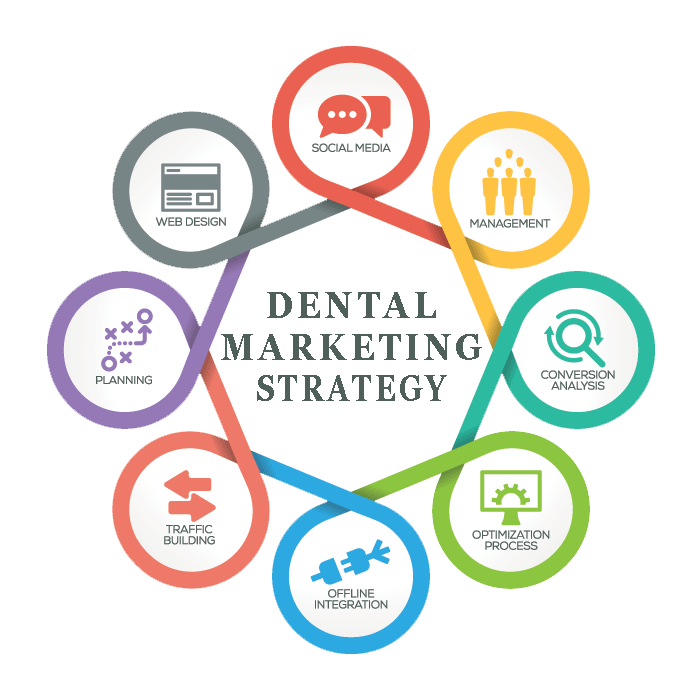
Before touching a single ad budget, the strongest dental practices in the East Midlands are getting their fundamentals right. A modern dental marketing plan rests on four pillars: a fast, conversion-focused website, dominant local SEO, multi-channel paid acquisition and a reputation engine that compounds over time. Skip any one of these and the others will underperform.
The first foundation is your website. In 2026 a dental website needs to load in under two seconds on a mobile, display treatment pricing transparently, feature high-quality before-and-after galleries (with proper GDC-compliant consent), include clear booking calls-to-action above the fold on every page, and use schema markup so search engines understand your practice, services and location. If your current site was built before 2023, it is almost certainly losing you patients to friction. A Nottingham-based prospective Invisalign patient comparing five practices on her phone during lunch will not wait for a slow site or hunt through three menus to find a price guide.
The second foundation is Google Business Profile optimisation. For a practice in Derby or Leicester, ranking in the Google Map Pack – those top three local results that appear with a map – is more valuable than almost any other single marketing asset. It requires accurate name, address and phone consistency across every directory, weekly Google Posts, regular review acquisition, photo updates and meticulously chosen categories. Many practices set this up once when they opened and never touch it again, which is one of the easiest competitive gaps to exploit in 2026.
Local SEO: The Single Highest-ROI Channel for East Midlands Dental Practices
If you only invest in one marketing channel in 2026, make it local SEO. Local search drives a remarkable share of dental appointments, and patients searching for terms like “dentist near me Nottingham”, “Invisalign Leicester”, “dental implants Derby” or “emergency dentist Loughborough” are showing the highest possible intent – they want to book, often within days.
A proper local SEO strategy for an East Midlands dental practice begins with treatment-specific landing pages. Rather than a single “Services” page listing everything, you need individual, in-depth pages for each high-value treatment in each location you serve. A practice in West Bridgford serving the wider Nottingham area might build dedicated pages for Invisalign in Nottingham, dental implants in West Bridgford, composite bonding in Nottingham and emergency dental care in Nottingham – each between 1,200 and 2,500 words, each with FAQs, pricing guidance, before-and-after galleries and clear booking flows.
Add to this a robust local content strategy. Blog content answering questions real East Midlands patients are typing into Google – “How much do dental implants cost in Nottingham?”, “Best Invisalign provider in Leicester”, “What does private dentistry cost in Derby?” – will pull qualified traffic for years. Google’s AI Overviews and the new generation of AI search tools heavily favour content with clear question-format headings and direct concise answers in the first 40 to 60 words. Structuring your blog content this way means you stand a far better chance of being cited in AI-generated answers, which is fast becoming a major source of patient enquiries.
Citations and backlinks matter too. Get your practice listed in NHS Choices, Doctify, WhatClinic, BUPA Finder and reputable East Midlands business directories such as the Nottingham Post directory, Visit Leicester listings and local chamber of commerce sites. A handful of high-quality, locally-relevant backlinks will outperform fifty generic directory submissions every time.
Google Ads for East Midlands Dentists in 2026
Google Ads remains the fastest way to generate qualified consultations, but it has become significantly more expensive and more nuanced. Industry data indicates dental Google Ads costs have risen by roughly 35 to 40 percent since 2023, and practices running poorly structured campaigns are now burning through budgets without booking patients.
The plan that consistently works in the East Midlands market involves segmenting campaigns tightly by treatment and by geography. Run separate campaigns for Invisalign, dental implants, cosmetic dentistry, new patient examinations and emergency dentistry. Do not lump them together. Within each, build tight ad groups by location – Nottingham city centre, West Bridgford, Beeston, Mapperley, Leicester city, Loughborough, Derby and so on – with location-specific ad copy that includes the local area name. Patients are noticeably more likely to click an ad that names their town.
Use call-only ads on mobile for emergency dentistry. Use lead-form extensions for Invisalign and implants where patients are happy to submit details for a callback. Make sure every campaign sends traffic to a dedicated landing page that matches the keyword and treatment exactly, not to a generic homepage. The single biggest waste of dental ad spend in the East Midlands in 2026 is high-intent traffic landing on a homepage and bouncing.
Budget guidance for a typical practice: expect to invest a minimum of £1,500 to £3,000 per month in Google Ads to compete meaningfully for Invisalign and implant keywords in the larger East Midlands cities, with the lower end suitable for smaller market towns. Practices spending less than £800 a month usually find Google Ads disappointing, not because the channel does not work but because the data volume is insufficient to optimise effectively.
Meta Ads (Facebook and Instagram): Brand, Awareness and Cosmetic Demand Generation
The role of Meta advertising has shifted in 2026. Facebook and Instagram are no longer the precision targeting machines they once were, and many of the dental-specific audience options that existed two or three years ago have disappeared. However, Meta still has a clear and valuable role for East Midlands dental practices, particularly for cosmetic and aesthetic treatments.
Use Meta ads for brand awareness, before-and-after showcases (with GDC-compliant consent and disclaimers), Invisalign open days, implant consultation events and local community engagement. Practices in cosmetic-heavy markets like central Nottingham and Leicester see strong returns running short-form video ads on Instagram and Facebook, especially when the content features the actual clinical team rather than stock imagery. Local patients trust local faces.
Expect to run Meta ads with budgets of £1,000 to £3,000 per month for meaningful reach across an East Midlands city catchment. Combine them with retargeting — anyone who visits your Invisalign page should see your practice’s content on Instagram for the next thirty days.
Reputation Management: The Multiplier Effect
Roughly three-quarters of patients say online reviews are the most important factor when choosing a dental practice. In a competitive market like Nottingham or Leicester where a patient can find a dozen private dentists within a fifteen-minute drive, reviews are often the deciding factor between you and the practice down the road.
A proper 2026 reputation plan involves systematic review collection – a chairside verbal ask immediately post-treatment, an automated SMS within two hours and a follow-up email after twenty-four. Practices that implement this three-step request process consistently see review completion rates of around 25 percent compared to the 5 percent typical of ad-hoc requests. Target a minimum of fifteen new Google reviews per month if you are serious about ranking in the Map Pack and converting traffic once they land on your profile.
Respond to every review, positive and negative, within seventy-two hours. Negative reviews handled professionally and empathetically often convert browsers into bookers – they show you care.
Content Marketing and Authority Building
Patients spend significantly longer researching dental treatments than most practice owners realise – data suggests around half of patients spend two weeks or more comparing options before booking. This is your window to build trust through content.
A strong 2026 content plan for an East Midlands dental practice publishes two to four pieces per month, blending educational guides (“What to expect from dental implant surgery”, “Invisalign vs fixed braces: which is right for you?”), local content (“Best places to eat after dental surgery in Nottingham”, “Sponsoring Leicester Tigers community days”), and patient story features. Video content is increasingly important – short clinic tours, treatment walkthroughs and team introductions on Instagram Reels, TikTok and YouTube Shorts compound trust before a patient ever steps through the door.
Aim for at least twenty to thirty indexed pages across your treatments, local content and patient questions. Practices with thin content consistently underperform their better-resourced competitors in search.
Patient Retention and Lifetime Value
New patient acquisition gets the most attention, but the most profitable East Midlands practices in 2026 are equally focused on retention. A patient who joins a dental plan, attends every recall, takes up hygiene appointments and accepts cosmetic treatment over time can be worth £5,000 to £20,000 over a decade. Losing them after one visit because of poor communication or a missed recall is a significant unseen leak.
Implement automated recall reminders by SMS and email, run a structured dental plan with clear monthly pricing, send birthday and anniversary touches, and segment your patient database by treatment history so you can offer relevant follow-up treatments at the right time. Practices doing this well report no-show reductions of around 30 percent and significant uplifts in treatment acceptance.
Building Your 2026 Marketing Plan: A Practical Framework
Pulling all of this together, here is a practical structure for an East Midlands dental practice marketing plan for 2026. Start with a clear-eyed audit of where you are now – review your Google rankings for your top ten treatment-and-location keywords, check your Google Business Profile completeness, count your monthly reviews, audit your website speed and conversion paths, and map your current marketing spend against the patients each channel produces.
Next, set specific twelve-month goals. Rather than vague aspirations like “more patients”, set numbers: 50 new Invisalign consultations per quarter, 20 implant cases per year, an additional £150,000 in private revenue, 200 new Google reviews. Numbers force discipline.
Allocate your budget across channels in line with what the data supports. A reasonable starting allocation for a private-leaning East Midlands practice with a £4,000 to £6,000 monthly marketing budget might look like 30 percent on SEO and content, 35 percent on Google Ads, 20 percent on Meta ads, 10 percent on reputation and retention tools, and 5 percent on testing new channels.
Build a content calendar covering twelve months. Plan landing pages by quarter. Schedule monthly review of every channel’s performance against booked consultations and treatment starts, not just clicks or impressions.
Measuring What Matters
The dental marketing plans that succeed in the East Midlands in 2026 are the ones with proper measurement built in from day one. Vanity metrics like website visits and ad impressions are meaningless on their own – what matters is the cost per booked consultation, the consultation-to-treatment conversion rate, the average case value by channel, and the lifetime value of patients acquired through each source.
Implement call tracking so you know which channels drive your phone enquiries. Set up conversion tracking on your website forms. Connect everything to a simple dashboard you review weekly. Phone enquiries typically convert significantly higher than online forms for high-value treatments, so do not under-invest in the channels that drive calls.
Compliance: The Non-Negotiable Layer
Every piece of dental marketing in the UK must comply with General Dental Council advertising standards, the Advertising Standards Authority codes and CAP guidance. Before-and-after photographs require explicit patient consent. You cannot make unsubstantiated clinical claims such as guaranteeing results. Disclaimers like “results vary by individual” should appear on treatment showcase content. Pricing must be transparent and accurate. Any testimonials or reviews used in advertising must be genuine and verifiable.
Practices that cut corners on compliance not only risk GDC sanction but also damage long-term trust with the patients they most want to attract. Build compliance into your sign-off process for every piece of content, image and ad.
Should You Run Your Marketing In-House or Use an Agency?
This is one of the most common questions principal dentists ask, and the honest answer is that it depends on your scale and your time. A solo practice with a single principal can sometimes manage Google Business Profile, basic social media and review collection in-house, while outsourcing technical SEO and paid ads to a specialist. Larger practices and groups across the East Midlands almost always benefit from a specialist dental marketing agency that brings benchmark data, proven playbooks and dedicated capacity.
The real question is not whether you can do it yourself but whether your time is better spent in the surgery delivering high-value clinical work or learning the technical detail of conversion-rate optimisation. For most principals in Nottingham, Leicester and Derby, the maths favours delegation.
The Bottom Line for East Midlands Dental Practices in 2026
The East Midlands dental market in 2026 rewards practices that act with structure, consistency and patience. There is no single tactic, no magic Facebook ad and no clever SEO hack that delivers sustainable growth on its own. The practices building real momentum are doing the unsexy work – getting their fundamentals right, publishing useful content month after month, collecting reviews systematically, measuring ruthlessly and refining quarterly.
If you serve patients across Nottingham, Leicester, Derby, Loughborough, Northampton, Lincoln, Mansfield or anywhere else in the region, the opportunity in front of you is genuinely significant. Private demand is rising, competition is real but beatable, and the marketing channels available in 2026 are more measurable than ever before. Build the plan, fund it properly, and stay consistent for twelve months. The compounding returns over years three, four and five are where dental marketing stops being an expense and becomes the single most valuable investment your practice ever makes.
Start with an honest audit this month. Pick three priorities for the next ninety days. Block out time every Monday morning to review your numbers. That is how the strongest dental practices across the East Midlands will quietly take market share through 2026 and beyond.

 Call Now
  Book A Call