
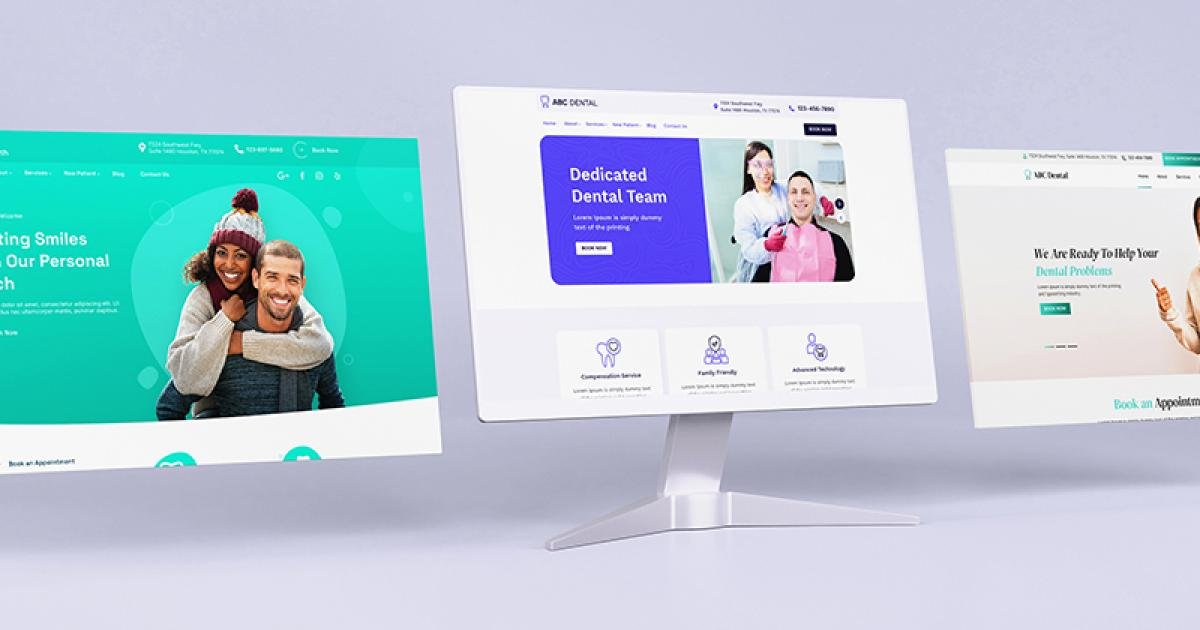
Website Design for Dentists 2026: The Complete UK Guide to Building a Practice Website That Actually Wins Patients
In 2026, your dental website is no longer a digital business card – it’s your busiest receptionist, your most persuasive treatment coordinator, and very often the first impression a nervous new patient has of your practice. Yet thousands of UK dental practices are still running outdated, slow, template-driven websites that quietly cost them thousands of pounds in lost bookings every month.
This guide breaks down exactly what modern website design for dentists in 2026 looks like – what patients now expect, what Google rewards, and what your competitors are already doing. Whether you run a single-chair NHS practice in Nottingham, a private cosmetic clinic in the East Midlands, or a multi-site dental group, the principles below will help you turn your website into a genuine growth engine.
Why Dental Website Design Has Changed in 2026
Patient behaviour has shifted permanently. People don’t just find a dentist online anymore – they research, compare, read reviews, scan before-and-after galleries, and decide whether they trust you before they ever pick up the phone.
Three big shifts are shaping dental web design this year:
- Mobile-first is non-negotiable. Over 80% of UK dental searches now happen on a phone – often late at night, in pain, or while comparing local practices in a waiting room.
- AI search is rewriting visibility. Patients are increasingly asking ChatGPT, Gemini and Google’s AI Overviews things like “best dentist in Nottingham for Invisalign”. Practices without clear, structured, well-written content are invisible in these results.
- Trust has become the conversion lever. Patients are anxious by default. The websites that win in 2026 are the ones that calm that anxiety the fastest.
If your current website was built before 2024, there’s a strong chance it’s failing on at least one of these fronts – and almost certainly all three.
The 10 Essentials of Great Website Design for Dentists in 2026
Here’s what every modern dental practice website should have. Treat this as a checklist for your current site.
1. A Mobile-First, Lightning-Fast Build
Your homepage should load in under three seconds on a 4G connection. Anything slower and patients drop off before they’ve even seen your name. This means compressed images, clean code, modern hosting, and a layout that’s designed for a thumb – not a mouse.
2. Online Booking That Actually Works
In 2026, “Call us to book” is a friction point. Patients expect to book a consultation in the same way they book a restaurant – three taps, done. Integrating live booking (or at minimum a calendar tool like Calendly or your practice management software) can lift conversions by 30% or more.
3. Clear, Confident Calls-to-Action
Every page should answer two questions instantly: What do you do? and What do I do next? Strong CTAs – Book a Consultation, Call the Practice, Start Your Smile Journey – should appear above the fold and repeat every couple of scrolls.
4. Service Pages Written for Humans and Search Engines
Generic “Our Treatments” pages don’t rank in 2026. You need dedicated, in-depth pages for each treatment you offer – Invisalign, dental implants, composite bonding, teeth whitening, emergency dentistry, hygienist services. Each one should answer the questions patients actually ask, including price ranges, what to expect, recovery time, and finance options.
5. Local SEO Baked In
If you want to be found for “dentist in Nottingham” or “private dentist near me”, your website needs city and neighbourhood names in titles, headings and content – used naturally, not stuffed. Pair that with a properly optimised Google Business Profile, consistent NAP (Name, Address, Phone) across the site, and LocalBusiness schema markup.
6. Visible Trust Signals
Patients scan for these subconsciously. Make sure your site clearly shows:
- GDC registration numbers and clinician credentials
- Embedded Google reviews (real, recent, and plentiful)
- Before-and-after galleries from your own patients
- Professional photography of your team and practice – not stock photos
- CQC information and any specialist accreditations
7. Authentic Photography
Stock images of strangers smiling broke trust years ago. A proper photoshoot of your real team, real reception, real surgery rooms and (with consent) real patients is one of the highest-ROI investments a dental practice can make. It signals that you have nothing to hide.
8. An Active, Useful Blog
A practice publishing one quality blog post a month builds long-term authority that compounds. Cover the questions patients actually type into Google: “Does Invisalign hurt?”, “How much do dental implants cost in the UK?”, “What’s the difference between NHS and private dental care?”. Each post becomes a new doorway into your website.
9. Accessibility for Everyone
A website that’s hard to use for someone with low vision, motor impairment or a screen reader isn’t just bad practice – it’s bad business. Strong colour contrast, descriptive alt text on images, keyboard-friendly navigation and clear, readable fonts make your site usable by every patient, not just the easy ones.
10. Built for AI Search Visibility
This is the biggest 2026 shift. AI engines pull recommendations from sites that have clear answer blocks, FAQ sections, structured data (Dentist, Medical Organisation, FAQ Page schema) and topical depth. If your site is built like it’s still 2019, AI engines simply won’t see you.
Common Mistakes Dental Practices Still Make Online
Even practices that have invested in a website often fall into the same traps:
- Hiding contact information – your phone number should be visible on every single page, ideally sticky on mobile.
- Vague pricing – patients want a sense of cost before they enquire. “Prices from £X” is enough to remove the biggest barrier.
- No reviews on the website – leaving them only on Google is a missed conversion opportunity.
- Treating the website as a one-time project – Google rewards sites that update; static sites slowly slip down the rankings.
- DIY templates – they look fine but rarely convert, and almost never rank against properly built competitors.
If any of these sound familiar, your website is leaking patients every single week.
What a 2026 Dental Website Should Cost (UK Realistic Numbers)
A properly built, conversion-focused dental website in the UK typically falls into one of three brackets:
- Template-based / DIY (£0 – £500): Suitable only for brand-new practices on a tight budget. Limited SEO potential.
- Mid-tier custom build (£2,000 – £5,000): Bespoke design, proper SEO foundations, integrated booking. Right for most single-site practices.
- Premium / multi-site (£5,000 – £15,000+): Custom development, full content strategy, photography, ongoing SEO. Common for cosmetic and private clinics.
The honest truth: a £3,000 website that wins you ten new high-value patients a month pays for itself within weeks. A £200 template that wins you none costs far more in the long run.
How Warwick Road Studio Builds Websites for Dental Practices
At Warwick Road Studio, we build bespoke websites for dental practices across Nottingham, the East Midlands, and the wider UK – designed around how patients actually choose a dentist in 2026.
Every build includes:
- A custom, mobile-first design that reflects your practice’s personality
- SEO foundations built in from day one
- Treatment-by-treatment service pages written to rank locally
- Integrated booking and clear CTAs
- Trust signals, real photography support, and ongoing performance reviews
- Realistic, achievable strategies – no inflated promises, no jargon
We focus on what dental practice owners actually need: more of the right patients, booking the right treatments, consistently.
Frequently Asked Questions
How long does it take to design a dental website?
A typical bespoke dental website takes 4 to 8 weeks from brief to launch, depending on content readiness, photography and the complexity of features like integrated booking.
Do I need a separate website for NHS and private services?
Usually no – a single, well-structured site with clear sections for NHS and private treatments works best and is easier to maintain.
How important is SEO for a new dental practice website?
Critical. Without SEO, even a beautiful website will sit invisibly on page 10 of Google. SEO should be planned before the site is built, not bolted on afterwards.
Will a new website actually bring me more patients?
A well-designed website will only bring more patients if it’s combined with strong local SEO, fast performance and clear conversion paths. The design alone doesn’t do it – the strategy behind it does.
Can you redesign my existing dental website?
Yes. We regularly take over outdated dental websites, preserve their existing SEO equity, and rebuild them for modern performance and conversion.
Ready to Build a Dental Website That Wins More Patients?
If your current website is more than two or three years old, it’s almost certainly underperforming against the 2026 standard. The good news: that’s a fixable problem, and a high-converting dental website often pays for itself in a single month of new bookings.
📞 Call us on +44 7760 859069 🌐 Visit warwickroadstudio.co.uk 📅 Or book a free 30-minute strategy call — we’ll review your current website and show you exactly where the opportunities are.
Warwick Road Studio – tailored marketing and web solutions for UK dental practices.


 Call Now
  Book A Call