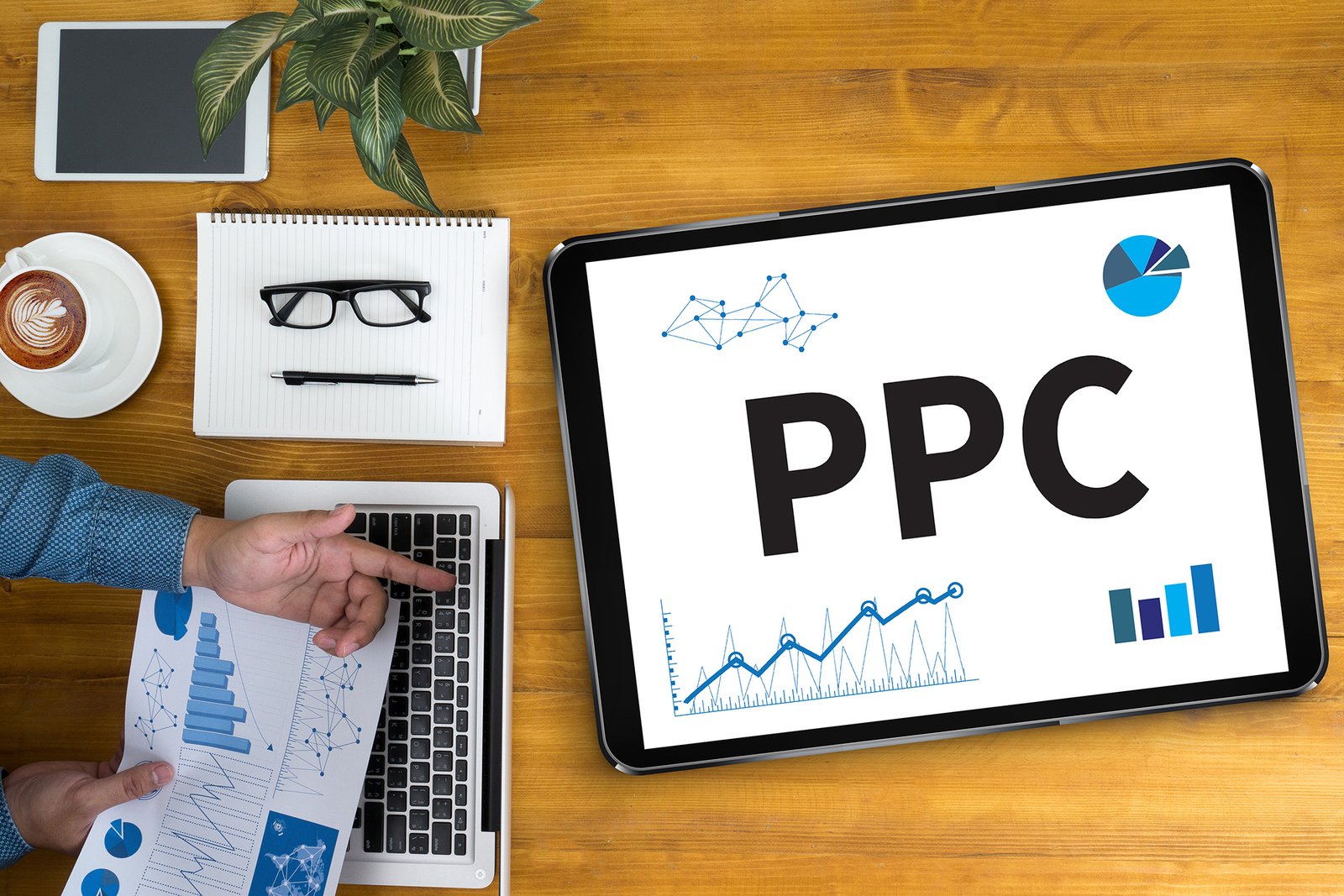
Generating a consistent flow of high-quality leads is the lifeblood of almost every business. Without a reliable pipeline of new enquiries, growth stalls, revenue plateaus, and the pressure mounts. In the modern digital landscape, businesses have more tools available to them than ever before – but few are as immediate, as measurable, or as precisely targeted as a well-managed PPC campaign.
Pay-per-click advertising has transformed the way businesses connect with potential customers. Unlike traditional advertising, which broadcasts a message to a broad audience and hopes for the best, PPC advertising places your business in front of people who are actively searching for what you offer, at the exact moment they are ready to buy. The result is a dramatically higher quality of lead – and a far more efficient use of your marketing budget.
This article explores in depth why PPC campaigns are one of the most important tools available to businesses looking to drive targeted leads, what makes paid search advertising so effective, how to avoid common pitfalls, and why professional PPC management is so often the difference between campaigns that deliver impressive returns and those that simply burn through budget.
What is PPC Advertising and How Does It Work?
Before exploring the strategic importance of pay-per-click advertising, it is worth establishing clearly what PPC is and how it operates.
PPC, or pay-per-click, is a model of digital advertising in which you pay a fee each time one of your ads is clicked. The most widely used PPC platform is Google Ads – formerly known as Google AdWords – which allows businesses to bid on keywords so that their advertisements appear at the top of Google’s search results when users search for those terms.
When someone types “emergency plumber Nottingham,” “best accountant near me,” or “buy running shoes online” into Google, what they see at the very top of the results page – above the organic listings – are paid advertisements from businesses that have bid to appear for those searches. If a user clicks on one of those ads, the advertiser pays a fee. If nobody clicks, no fee is charged. Hence the name: pay-per-click.
The amount you pay per click is determined through an auction system. Google considers both your bid – the maximum amount you are willing to pay per click – and your Quality Score, a metric that reflects the relevance and quality of your ad and landing page. A highly relevant, well-optimised ad can achieve a better position than a competitor bidding more money, making PPC campaign management as much about skill and strategy as it is about budget.
Beyond Google Ads, PPC advertising spans a range of platforms including Microsoft Ads (which serves results on Bing), Meta Ads (Facebook and Instagram), LinkedIn Ads, YouTube Ads, and more. Each platform has its own strengths depending on your business type, audience, and objectives. However, for the majority of businesses focused on driving targeted leads, Google Ads remains the dominant and most powerful channel.
The Case for PPC: Why It Matters More Than Ever in 2025
The digital advertising landscape in 2025 is more competitive than it has ever been. Organic search rankings – the unpaid results that appear beneath paid ads – are harder to achieve and slower to build than at any previous point in Google’s history. The rise of AI-generated search features, more complex ranking algorithms, and intense competition for top positions means that even businesses with strong SEO foundations can find organic visibility increasingly difficult to sustain.
In this environment, PPC campaigns have become not just a supplementary channel but a strategic necessity for businesses serious about lead generation. Here is why:
Organic SEO takes time. A well-executed SEO strategy can take six to twelve months – sometimes longer – to produce significant results in competitive markets. For a new business, a business entering a new market, or a business with an urgent need for leads, waiting that long is simply not viable. A PPC campaign can be set up and generating traffic within hours of going live.
The search landscape is more crowded. With Google now integrating AI-generated answers, featured snippets, map packs, and other rich features into its results pages, organic listings are being pushed further and further down the page. In many searches, paid ads occupy the most prominent visible positions. If you are not there, a competitor is.
Consumer intent has never been higher. People who use search engines to find products and services are, by definition, actively looking. They are not passively scrolling a social media feed – they are in purchase mode, with a specific need and a high readiness to take action. Paid search advertising intercepts these high-intent users at precisely the right moment.
The Single Biggest Advantage of PPC: Targeting With Precision
Ask any experienced PPC consultant what makes paid search advertising genuinely superior to most other forms of marketing, and the answer is almost always the same: targeting.
Traditional advertising – print, radio, billboards, television – operates on the principle of broad reach. You pay to put your message in front of as many people as possible and accept that the vast majority of them will have no interest in what you are selling. The waste is enormous, and the measurement is imprecise.
PPC advertising
Inverts this model entirely. Rather than broadcasting to the many in the hope of reaching the few, you target the few directly – the people who are actively searching for exactly what you offer, in exactly the location you serve, at exactly the time they are ready to act.
The targeting capabilities available within a modern Google Ads campaign are extraordinarily granular:
Keyword targeting
Allows you to show your ads only when users search for specific terms directly related to your business. You can target broad concepts, specific phrases, or exact search terms, and you can exclude irrelevant searches using negative keywords to ensure your budget is spent only on qualified traffic.
Geographic targeting
Means you can restrict your ads to specific cities, regions, or even postcode areas. For a local business in Nottingham, this means you are only paying to reach people in the areas you actually serve – not wasting budget on clicks from Birmingham or London.
Device targeting
Allows you to adjust bids based on whether users are searching on mobile, tablet, or desktop – ensuring your budget is weighted toward the device types most likely to convert for your specific business.
Time-of-day and day-of-week targeting
Means you can schedule your ads to run only during hours when your business is active and able to respond to enquiries, or during the times of day when your audience is most likely to convert.
Audience targeting
Enables you to layer additional data onto your keyword targeting – showing ads specifically to users who have previously visited your website, who match certain demographic profiles, or who have demonstrated interests relevant to your business.
This level of precision means that every pound of your PPC budget is being deployed with a level of intentionality that is simply impossible to replicate with traditional advertising channels.
PPC Delivers Immediate Visibility and Results
One of the most compelling arguments for investing in a PPC campaign – particularly for businesses that cannot afford to wait months for organic SEO to gain traction – is the speed at which results materialise.
From the moment your campaign goes live, your ads can appear at the top of Google’s search results for your chosen keywords. Within the first days of a campaign, you can begin gathering real data: how many people are seeing your ads, what percentage are clicking through, what they are doing when they arrive on your site, and – most importantly – how many are converting into enquiries or sales.
This immediacy is invaluable in several specific situations:
New business launch. When you open a new business or launch a new service, you have zero organic search presence. A PPC campaign bridges the gap, generating visibility and leads while your organic SEO strategy builds momentum in the background.
Seasonal promotions and time-sensitive offers. If you are running a promotion that is only valid for a limited period, waiting months for organic content to rank is not an option. PPC allows you to generate traffic for a specific campaign window and turn it off the moment the promotion ends.
Testing new markets. If you are considering expanding your business into a new geographic area or product category, a paid search campaign allows you to test demand quickly and cost-effectively before committing to a full-scale expansion.
Filling pipeline gaps. Even businesses with strong organic visibility experience periods when enquiries dip. A PPC campaign can be scaled up rapidly to fill pipeline gaps and maintain a consistent flow of leads throughout the year.
PPC is Fully Measurable: You Know Exactly What You Are Getting
One of the most frustrating aspects of traditional marketing is the difficulty of measuring its impact. How many new customers came through the door because of your newspaper ad? How many calls were generated by your radio spot? In most cases, you simply do not know with any certainty.
PPC advertising
Eliminates this ambiguity entirely. Every aspect of a Google Ads campaign is trackable and measurable with extraordinary precision:
Impressions tell you how many times your ads were displayed in search results – giving you a clear picture of your market reach and visibility.
Click-through rate (CTR)
Reveals what percentage of people who saw your ad chose to click on it – a key indicator of how relevant and compelling your ad copy is.
Cost per click (CPC)
Shows exactly how much you are paying for each visitor to your website – allowing you to assess efficiency and identify opportunities to reduce costs through better targeting and improved Quality Scores.
Conversion tracking
When properly configured – tells you exactly how many of your website visitors completed a desired action: submitted an enquiry form, called your phone number, purchased a product, or booked an appointment. This is the metric that matters most.
Cost per lead (CPL)
Is perhaps the single most important metric in PPC lead generation. It tells you precisely how much you are spending to acquire each new enquiry or customer – making it straightforward to calculate the return on your advertising investment and compare it against other marketing channels.
Return on ad spend (ROAS)
Measures the revenue generated for every pound spent on advertising – the ultimate measure of a PPC campaign’s commercial effectiveness.
This data richness means that a professionally managed PPC campaign is never static. Every week, your PPC manager is analysing performance data, identifying what is working and what is not, making adjustments to bids, ad copy, targeting, and landing pages – and continuously improving the campaign’s efficiency and output. Over time, a well-managed PPC strategy becomes progressively more cost-effective as learnings accumulate and the campaign is refined.
PPC and SEO: Stronger Together
A question that arises frequently is whether businesses should invest in PPC advertising or SEO – and the honest answer is that framing it as an either/or choice is a false dichotomy. The most effective digital marketing strategies use both channels in a complementary and mutually reinforcing way.
SEO builds long-term organic visibility. It takes time to deliver results, but once achieved, organic rankings generate traffic without a per-click cost – making them highly efficient at scale. Strong SEO also builds brand authority and trust in a way that paid ads alone cannot replicate.
PPC campaigns deliver immediate visibility, precise targeting, and rich data – but they require ongoing investment. When your ads are paused, your paid traffic stops. PPC is a tap you can turn on and off; SEO is a rising tide that takes time to build but, once established, keeps lifting you.
Used together, the two channels complement each other powerfully. And during the months when your organic rankings are still building, paid search advertising ensures you are still visible and generating leads.
For businesses in Nottingham working with a PPC agency alongside an SEO provider – or better still, a Nottingham digital agency that manages both – the combined effect on lead generation is consistently greater than either channel could deliver independently.
Common PPC Mistakes That Cost Businesses Money
The power of PPC advertising comes with a caveat: done poorly, it can waste significant budget with little to show for it. Understanding the most common mistakes is essential – whether you are managing campaigns yourself or evaluating the work of a PPC agency.
Targeting too broadly
Running ads against highly generic, high-volume keywords without sufficient negative keyword filters means your budget is consumed by irrelevant clicks from people with no genuine interest in your specific offer. Precise, well-researched keyword targeting is fundamental to an efficient PPC campaign.
Sending all traffic to the homepage
Your homepage is designed to serve multiple audiences and purposes simultaneously. Sending paid traffic there, rather than to a dedicated landing page specifically crafted to match the intent of your ad and guide visitors toward conversion, is one of the most common and costly PPC mistakes.
Neglecting negative keywords
Negative keywords are terms for which you explicitly do not want your ads to appear. Without a comprehensive negative keyword list, your ads will be triggered by irrelevant searches that waste budget on unqualified clicks. A well-built negative keyword list is as important as the positive keywords you are bidding on.
Setting it and forgetting it
A PPC campaign is not a set-and-forget investment. Without regular, active management – monitoring performance data, adjusting bids, testing new ad copy, refining targeting, and expanding or pruning keywords – campaign performance will deteriorate over time as competition and search behaviour evolve.
Ignoring Quality Score
Google’s Quality Score rewards advertisers whose ads and landing pages are highly relevant to the keywords they are bidding on. A low Quality Score means you pay more per click and achieve lower ad positions than competitors who may be bidding less. Improving Quality Score through better ad relevance and landing page quality directly reduces your cost per click and improves your visibility.
Failing to track conversions properly
Without accurate conversion tracking, you have no way of knowing which keywords, ads, or targeting settings are generating actual leads or sales. You cannot optimise what you cannot measure. Proper conversion tracking setup is an absolute prerequisite for any serious PPC management programme.
What Makes a Great PPC Campaign Strategy?
A high-performing PPC campaign is built on a clear strategic framework. Whether you are managing campaigns in-house or working with a PPC agency in Nottingham, the following elements are non-negotiable:
In-depth keyword research forms the foundation. Understanding exactly what your target customers are searching for – including long-tail variations, local modifiers, and competitor terms – and mapping those searches to well-structured ad groups ensures your ads are shown to the right people with the right message.
Compelling ad copy that speaks directly to the searcher’s intent, highlights your unique value proposition, and includes a clear and urgent call to action is essential for achieving a strong click-through rate. Testing multiple ad variations – including Responsive Search Ads that allow Google to test different combinations of headlines and descriptions – enables continuous improvement.
Dedicated, high-converting landing pages matched specifically to the intent of each ad group convert visitors at a significantly higher rate than generic pages. A landing page built for PPC lead generation should have a clear headline, compelling copy, strong social proof, and a prominent and frictionless conversion point.
Smart bidding strategy – choosing the right automated or manual bidding approach based on your campaign objectives, budget, and the maturity of your conversion data – directly impacts the efficiency with which your budget generates results. Experienced PPC management involves knowing when to use Target CPA, Maximise Conversions, Enhanced CPC, or manual bidding strategies depending on the specific circumstances of the campaign.
Continuous testing and optimisation is what separates a mediocre PPC campaign from an exceptional one. The best PPC managers are relentlessly analytical — always testing new hypotheses, learning from data, and making incremental improvements that compound into significant performance gains over time.
Why Professional PPC Management Matters
It is entirely possible to set up a basic Google Ads campaign without specialist knowledge. Google’s self-serve interface is designed to be accessible, and the platform actively encourages businesses to get started with minimal guidance. However, the gap between a campaign set up by a non-specialist and one managed by an experienced PPC consultant is vast – and the financial implications are significant.
Poorly managed PPC campaigns routinely waste 30–60% of their budget on irrelevant clicks, suboptimal bidding, and underperforming ads. For a business spending £2,000 per month on paid advertising, that could mean £700–£1,200 per month being spent on traffic that was never going to convert.
Professional PPC management pays for itself many times over through improved targeting efficiency, better Quality Scores, stronger landing page conversion rates, and the ongoing optimisation that prevents budget waste. A skilled PPC agency does not just manage your campaigns – they act as a strategic partner, helping you understand the data, identify growth opportunities, and connect your paid advertising activity to your broader business objectives.
The Bottom Line: PPC is One of the Most Powerful Lead Generation Tools Available
For businesses that need a reliable, scalable, and precisely measurable source of targeted leads, a professionally managed PPC campaign is one of the most powerful tools in the digital marketing toolkit. It combines immediacy, precision targeting, complete measurability, and the ability to scale – making it uniquely well suited to the demands of modern lead generation.
Whether you are a small business in Nottingham looking to generate your first consistent flow of online enquiries, an established brand looking to enter a new market, or a growing company looking to accelerate lead volume during peak periods, pay-per-click advertising offers a direct and proven route to results.
The key is to approach it strategically – with well-researched targeting, compelling creative, properly configured tracking, and consistent professional management. Done correctly, a PPC campaign does not just generate leads. It generates the right leads: people who are actively looking for what you offer, at the moment they are ready to act.
That is a level of marketing precision that few other channels can match.
Interested in launching or improving a PPC campaign for your business? Get in touch with our team today to discuss a tailored paid search strategy that drives real, targeted leads and delivers a strong return on your investment.

 Call Now
  Book A Call